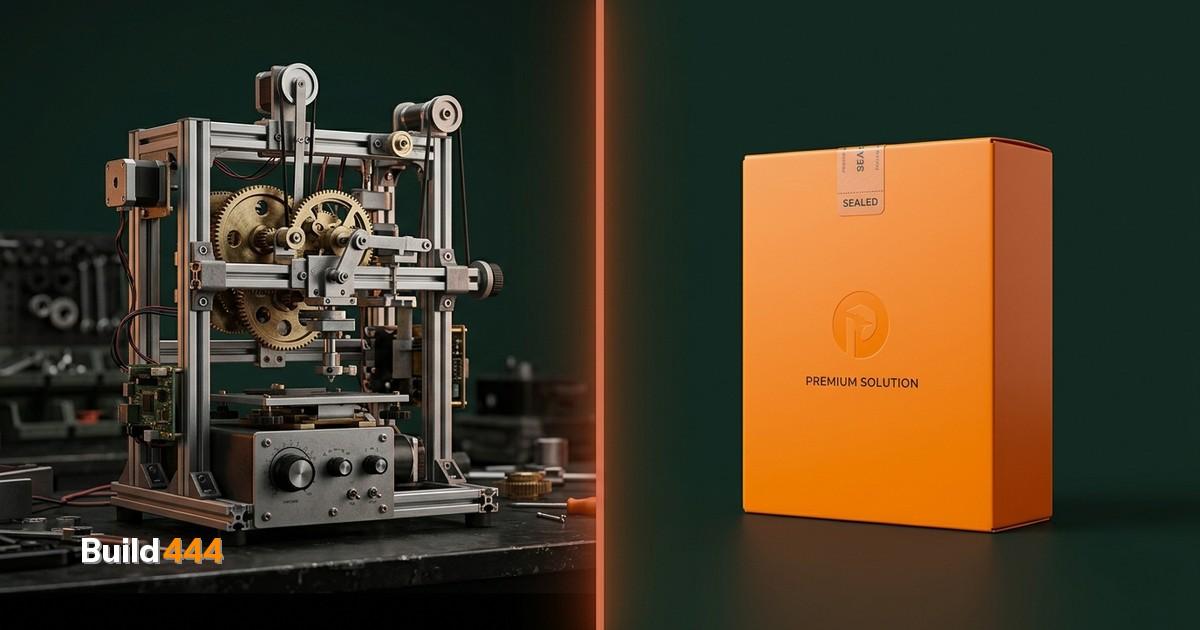
The honest answer is: it depends
I have built custom CRMs. I have also deployed HubSpot across 27 countries for TITAN Containers. Both were the right call for that specific client. Neither is universally better.
But the question keeps coming up because people feel trapped. They started with HubSpot's free tier. It worked great. Then the team grew. Then they needed automation. Then custom reporting. Then the invoice hit $2,400/month and they started wondering if there was a better way.
There often is. But not always.
When HubSpot is the right call
HubSpot is genuinely excellent software. I am not going to pretend otherwise. For certain situations, it is the fastest path to a working CRM with the least risk.
You have a small team with a standard sales process. If your pipeline is lead, qualified, proposal, negotiation, closed-won, and your team is under 10 people, HubSpot's defaults will serve you well. The out-of-the-box pipeline stages, deal tracking, and contact management work without customization.
You need the ecosystem. HubSpot integrates with over 1,500 tools. Slack, Gmail, Outlook, Zoom, Shopify, WordPress. If your stack is mainstream, HubSpot probably has a native integration. A custom CRM means building those connections yourself or wiring them through something like n8n.
You want to be running tomorrow. A HubSpot deployment takes days. Import your contacts, configure your pipeline stages, connect your email, train the team. Done. A custom CRM takes weeks to months depending on complexity. If speed matters more than perfect fit, HubSpot wins.
You value support and documentation. HubSpot's knowledge base is massive. Their academy is free. When something breaks, you can call someone. With a custom system, support means your developer. If that developer disappears, you have a problem.
When custom wins
The cases where custom CRM development makes sense are more common than most people think.
Your workflow does not fit a template. HubSpot assumes a fairly standard B2B sales process. If your business has non-linear pipelines, multiple simultaneous deal tracks, or processes that do not map to stages, you will spend more time fighting HubSpot's structure than using it. I have seen companies with 40+ custom properties trying to force their process into HubSpot's mold. That is a sign.
Per-seat pricing is killing you. HubSpot's Sales Hub Professional is $100/seat/month. Enterprise is $150/seat/month. A 20-person sales team on Professional costs $24,000/year. On Enterprise, $36,000/year. And that is just CRM. Add Marketing Hub and Service Hub and you are looking at serious money. A custom CRM has no per-seat fees. Ever.
You need full data ownership. HubSpot hosts your data on their servers. For most companies, that is fine. For companies in regulated industries, with sensitive client data, or with strict compliance requirements, it is not. A custom CRM can run on your own infrastructure, in your own country, under your own security policies.
You are integration-heavy with non-standard tools. If your tech stack includes internal tools, legacy systems, custom databases, or niche industry software, HubSpot's integration ecosystem will not help. You will end up building custom API connections anyway. At that point, you are already doing custom development, just on top of a platform that charges you monthly for the privilege.
Want to know where your website stands?
Get your full site analysis →The real cost comparison
Most articles get lazy here. They compare HubSpot's free tier to a $50,000 custom build and declare HubSpot the winner. That comparison is dishonest because nobody stays on the free tier.
What it actually looks like for a 10-person sales team that needs automation, custom reporting, and pipeline management:
HubSpot (realistic scenario):
- Sales Hub Professional: $100/seat x 10 = $1,000/month
- Marketing Hub Starter: $20/month
- Operations Hub Professional (for custom automation): $800/month
- Total: $1,820/month = $21,840/year
Custom CRM (realistic scenario):
- Development: $8,000-15,000 one-time
- Hosting: $50-200/month
- Maintenance and updates: $500-1,000/month
- Total year one: $14,600-29,400
- Total year two onwards: $6,600-14,400/year
The math is clear. HubSpot is cheaper in year one if your custom build is on the higher end. By year two, custom almost always wins. By year three, it is not even close.
And that gap widens every time you add a seat.
The TITAN Containers example
When TITAN Containers called us, they had a unique situation. Twenty-seven countries. Five brands. Over 200 depots. Their previous CRM was so heavily customized it was unmaintainable.
We built their system on HubSpot. Why? Because TITAN needed:
- A platform their global team could access from any country
- Native integrations with tools they already used
- A partner ecosystem for ongoing support across regions
- Speed. They could not wait 18 months for a ground-up build.
But we still built significant custom layers on top. Custom API integrations, automated lead routing by country, multi-brand pipeline management, and reporting dashboards that HubSpot's defaults could never provide.
The lesson: even when you choose HubSpot, you often end up doing custom development anyway. The question is whether that custom work sits on top of a $21,000/year platform or a $200/month server.
The decision framework
Stop thinking about features. Think about constraints.
Choose HubSpot if:
- You need to be live in under 2 weeks
- Your team is under 15 people and likely to stay there
- Your sales process follows a standard funnel
- You want phone support when things break
- Your annual CRM budget is under $15,000 and you are fine with that growing
Choose custom if:
- Your workflow has unique stages, branching, or non-linear paths
- You have more than 15 users and per-seat pricing hurts
- Data sovereignty or compliance requires self-hosting
- You already have developers on staff or a trusted agency
- You want to integrate with internal tools or legacy systems
Choose a phased approach if:
- You are not sure yet. Start with HubSpot free or Starter. Use it for 6 months. Document every time you hit a wall. Those walls become your custom CRM requirements spec. Then build exactly what you need, informed by real experience.
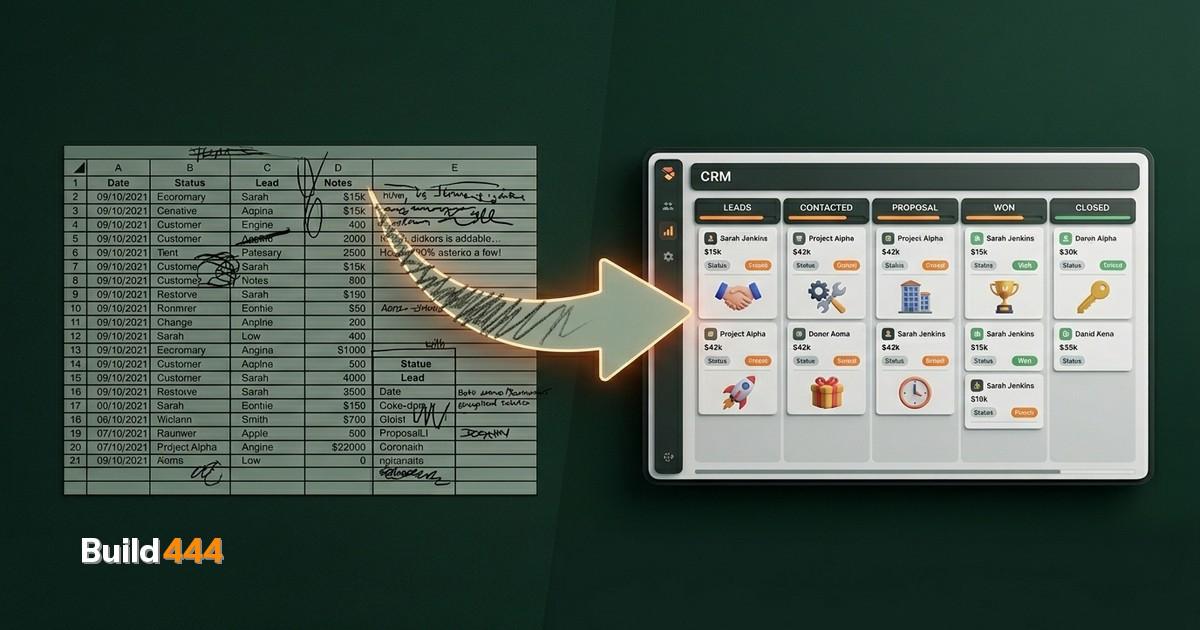
If you are still running everything on spreadsheets, the CRM question is secondary. Get off the spreadsheets first, then optimize the platform.
What we recommend to most clients
For most small businesses, HubSpot free or Starter is the right starting point. It is genuinely good software and the price is right.
For growing companies that have outgrown basic CRM, we build custom CRM solutions that match their exact workflow. No per-seat fees. Full data ownership. Integrations that work with their actual tools, not just the ones on HubSpot's marketplace.
Before choosing a CRM, make sure your website is pulling its weight. Our SEO audit shows exactly where you are losing traffic.
The worst choice is doing nothing. The second worst is choosing based on someone else's situation instead of your own.
Figure out what you need. Then pick the tool that fits. Not the other way around.