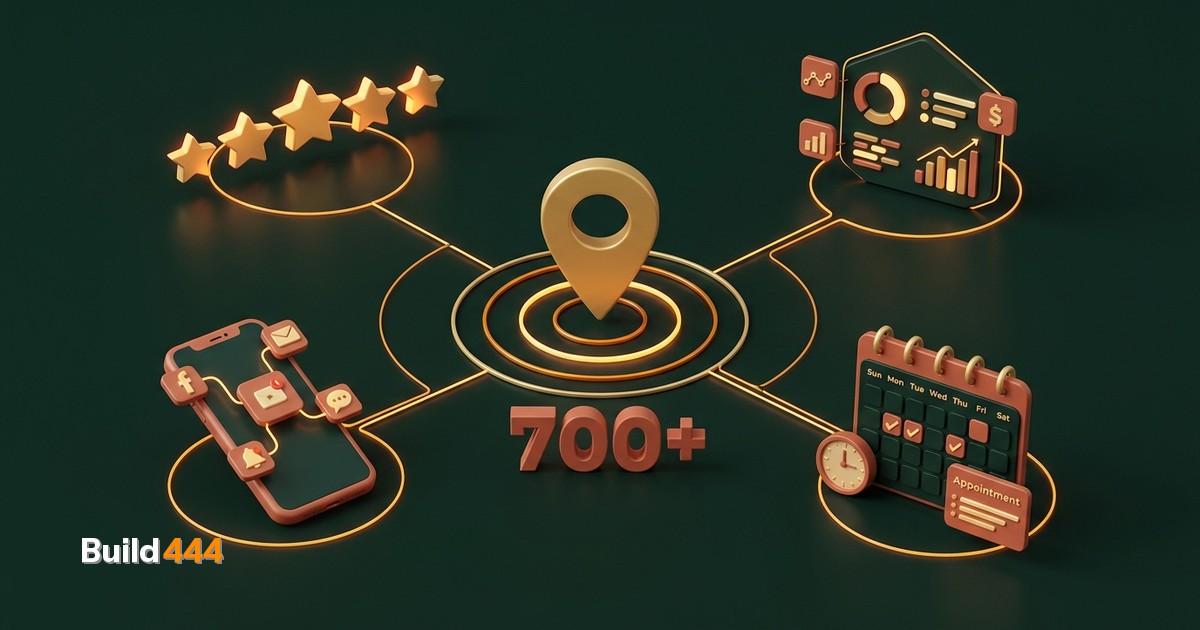
The most reviewed scooter rental on an island nobody heard of five years ago
Siargao is a small island in the Philippines. Five years ago, it was a surf spot known mostly to backpackers. Today it is one of Southeast Asia's fastest-growing tourist destinations. And Golden Bell is its most reviewed scooter rental, with over 700 five-star reviews on Google.
That did not happen by accident. It happened because we built a platform that turned every customer interaction into a review opportunity, every website visit into a booking, and every operational headache into a dashboard metric.
This is the story of how a scooter rental in the Philippines became the most trusted name on the island, and what that required from a technology perspective.
What Golden Bell needed
When Golden Bell came to us, they had the basics. A fleet of scooters. A location. Customers who kept coming back. What they did not have was any system connecting those pieces.
Bookings came in through WhatsApp messages, Instagram DMs, Facebook Messenger, and email. Sometimes all four at once for the same customer. There was no central booking system. No way to see fleet availability at a glance. No automated follow-up after a rental ended. And no strategy for turning happy customers into online reviews.
Building a website was the easy part. The real challenge was building a platform that handled the entire customer lifecycle: discovery, booking, fulfillment, follow-up, and reputation management. And it had to work for a team on a small island with intermittent internet.
What we built
Interactive Google Maps with 50+ pins and 7 curated routes
Siargao's main draw is exploration. Tourists rent scooters to explore the island. We built an interactive map with over 50 points of interest, each with descriptions, photos, and directions. Then we created 7 curated scooter routes that visitors could follow, from waterfall tours to surf spot circuits.
And this was the top-of-funnel strategy, not just a nice feature. People searching for "things to do in Siargao" or "Siargao scooter routes" found Golden Bell's website before they ever thought about renting a scooter. The map content drove organic traffic that converted into bookings.
Multi-channel booking integration
Customers could book through the website, WhatsApp, Instagram, Messenger, or email. All channels fed into the same system. No more missed messages. No more double bookings. No more "I sent you a DM three days ago and nobody replied."
Each channel had its own entry point but the same backend. A booking from WhatsApp created the same record as a booking from the website. The team could manage everything from one dashboard regardless of how the customer reached them.
Full admin dashboard
This is where operations went from chaotic to controlled. The dashboard included:
Fleet management with real-time availability. Every scooter tracked by status: available, rented, in maintenance, or reserved. No more guessing which scooters were free.
Booking tracking with customer history. Every rental, every interaction, every note in one place. When a returning customer booked again, the team could see their entire history.
Analytics showing booking trends, revenue by period, fleet utilization, and channel performance. For the first time, Golden Bell could answer questions like "which booking channel generates the most revenue" and "what is our average rental duration."
SEO health monitoring with a live score of 95/100. The dashboard tracked technical SEO metrics so issues could be caught and fixed before they affected rankings.
AI-powered task suggestions. The system analyzed patterns and suggested operational improvements: "Scooter #14 has been in maintenance for 12 days, consider replacing" or "Bookings from Instagram increased 40% this month, consider increasing ad spend there."
Want to know where your website stands?
Get your full site analysis →8 SEO blog articles that drive organic traffic
The booking platform was half the story. We built a content strategy around it.
Eight SEO-optimized blog articles targeting travel queries related to Siargao. Route guides, tips for first-time visitors, seasonal travel advice, and scooter safety content. Each article linked back to the booking system. Each article ranked for keywords that tourists search before they arrive on the island.
This created a traffic flywheel. Blog content attracted organic visitors. Organic visitors explored the map. Map exploration led to route planning. Route planning led to scooter bookings. Bookings led to reviews. Reviews improved trust signals. Trust signals improved rankings. Better rankings brought more organic visitors.
Every piece of the platform reinforced every other piece. Nothing was standalone.
Meta-designed social sharing
Every page on Golden Bell's site was built with social sharing in mind. Open Graph tags optimized for each platform. Custom images sized for Facebook, Instagram, and WhatsApp previews. Structured descriptions that looked good when shared in group chats, which is how most Siargao travel recommendations happen.
When a tourist shared a route from Golden Bell's map in a WhatsApp group, the preview showed the route name, a compelling image, and a clear call to action. Not a generic website thumbnail. A designed sharing experience that drove click-throughs.
This matters more than most businesses realize. Word of mouth in tourism happens in messaging apps now, not in conversations. If your shared links look bad, they get ignored. If they look intentional and trustworthy, they get clicked.
The review engine
700+ five-star Google reviews did not accumulate by chance. We built a systematic review collection process.
After every rental, the system sent a follow-up message thanking the customer and asking for a review. The timing was specific: long enough after the rental that they had their experience to reflect on, short enough that the memory was fresh. The message included a direct link to the Google review form. One tap to leave a review.
The key insight: most happy customers will leave a review if you make it effortless. They will not hunt for your Google listing, find the review button, and write something unprompted. But if you put a link in front of them at the right moment, 20-30% will tap it and write something positive.
Over months, that compounds. 700+ reviews with a near-perfect rating gave Golden Bell a trust advantage that no amount of advertising could buy. When tourists searched for scooter rentals in Siargao and saw one option with 700+ reviews and competitors with 30, the decision made itself.
The results
Golden Bell platform results: 700+ five-star Google reviews. Most reviewed scooter rental in Siargao. Interactive map with 50+ pins and 7 curated routes. Full admin dashboard with fleet, bookings, and analytics. 95/100 SEO health score. 8 organic traffic-driving blog articles. Multi-channel booking across 5 platforms. Automated review collection with 20-30% response rate.
The 700+ reviews number gets the attention, but the platform behind it is what makes the business work day to day. The dashboard eliminated the chaos of managing a fleet across multiple booking channels. The map content drives a steady stream of organic traffic. The blog articles compound in value over time as they accumulate backlinks and ranking history.
What this teaches about review management
Reviews are an infrastructure decision, not a marketing tactic.
If you build the system, you do not need to remind people to ask for reviews. You do not need to offer incentives. You do not need to manage it manually. The system sends the right message at the right time with the right link, and the reviews accumulate.
This applies to every service business, not just tourism. Restaurants, agencies, clinics, trades, consultants. Any business where trust drives the buying decision benefits from a systematic review collection process. And any business that relies on "we will ask customers to review us" without a system is leaving reviews on the table.
Building platforms, not websites
You could call Golden Bell a website. But that misses the point. It is a platform that connects discovery, booking, operations, and reputation management into a single system. Every component supports every other component.
Most businesses think they need a website. What they actually need is a system that connects their customer-facing presence to their operations. The website is just the part the customer sees.
If your business is running on disconnected tools, if bookings come in through five channels that do not talk to each other, if you have happy customers but no reviews, if your operations live in spreadsheets and your marketing lives somewhere else, we can build the platform that connects it all.
If you are planning your own store launch, read our guide to launching an online store for the full playbook. Check out our ecommerce services or web development services to see how we approach platform builds. Or grab an SEO audit report to find out where your current digital presence stands before planning the next step.
Free: 47-point SEO audit checklist
The same checklist we use on every client site. Download the PDF and audit your own site today.
Get the free checklist →