The revenue you are already losing
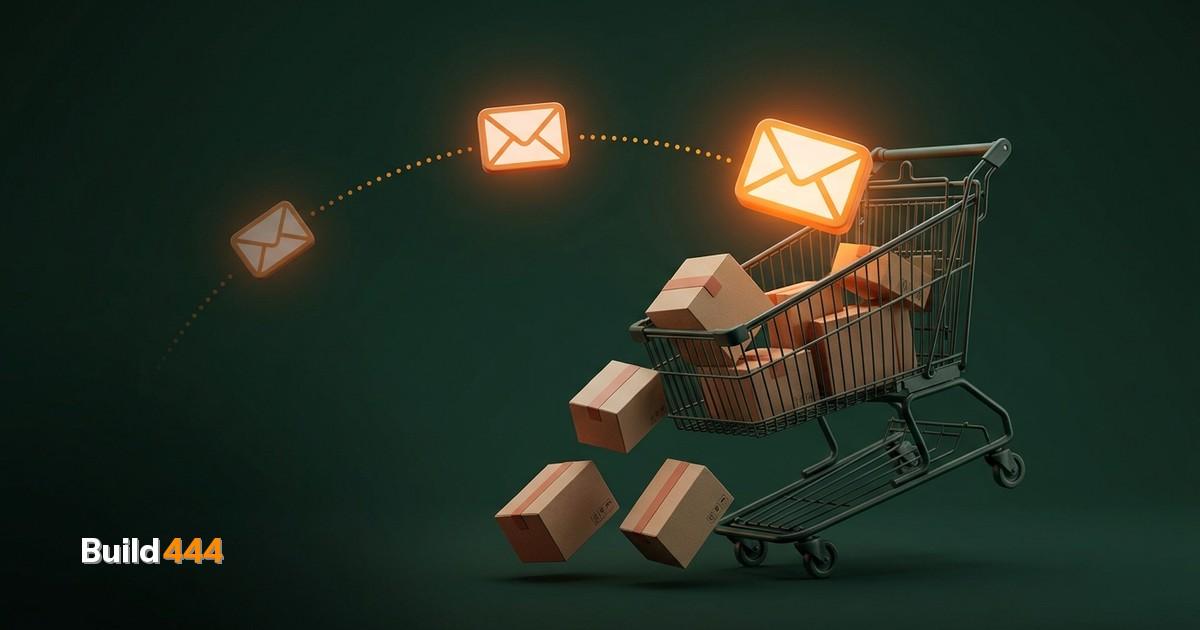
Every store owner knows this number but nobody does anything about it: 70% of ecommerce shopping carts get abandoned. Seven out of ten people who add products to their cart leave without buying.
That is not a hypothesis. That is a Baymard Institute meta-analysis of 49 studies. It has been consistent for a decade.
If your store does $20,000/month in revenue, that means roughly $46,000 worth of carts were abandoned to get there. You are capturing less than a third of the purchase intent coming to your site.
Now the number that matters: a well-built abandoned cart recovery sequence recaptures 5-15% of those abandoned carts. At 10% recovery on $46,000 in abandoned carts, that is $4,600/month in revenue you are currently leaving on the table.
No additional traffic. No new ad spend. Just emails to people who already wanted to buy from you.
Why carts get abandoned (and why it matters for recovery)
Understanding why someone abandoned determines what your recovery email should say. The reasons are well-documented:
- 48% unexpected costs. Shipping, taxes, or fees they did not see until checkout. Your recovery email cannot fix this, but your checkout can.
- 26% forced account creation. They did not want to create an account. Your recovery email should link directly to a guest checkout.
- 22% checkout too long or complicated. Similar to above. Link to a simplified checkout or directly to the cart with items preserved.
- 18% could not see total cost upfront. Again, a checkout design problem. Show the total clearly in the email.
- 17% did not trust the site with card info. Your recovery email should include trust signals: security badges, review counts, payment processor logos.
- 9% not enough payment methods. If you have added payment methods since they abandoned, mention it.
The remaining abandoners were price shopping, saving for later, or just browsing. Those are the hardest to recover but not impossible.
The 3-email recovery sequence
Three emails. That is the sweet spot. More than three has diminishing returns and starts to annoy people. Fewer than three leaves money on the table.
Email 1: The gentle reminder (1 hour after abandonment)
Purpose: Catch them while intent is still warm. No selling. No pressure. Just a reminder that their cart exists.
Subject line options:
- "You left something behind"
- "Your cart is waiting"
- "Still thinking it over?"
Content structure:
- One line acknowledging they left items in their cart
- Image of the product(s) they added
- Clear "Return to cart" button
- No discount. No urgency. No hard sell.
Why 1 hour: Sending immediately feels automated and aggressive. Waiting 24 hours means they have moved on. One hour catches the window where they remember what they were doing but enough time has passed that it feels like a helpful nudge, not surveillance.
Expected performance: 45-50% open rate, 12-15% click-through, 3-5% conversion.
Email 2: The value reinforcement (24 hours after abandonment)
Purpose: Address the reason they left. Add value, not pressure.
Subject line options:
- "Quick question about your order"
- "Here is what other customers say about [product]"
- "Your [product name] is still available"
Content structure:
- Lead with social proof: customer reviews, ratings, or testimonials for the specific product
- Address common objections (return policy, shipping times, warranty)
- Include a direct link back to the cart
- Still no discount
Why it works: By now, if they did not buy from email 1, they have an objection. The second email tries to answer that objection before they articulate it. Reviews and social proof are the most effective objection-killers in ecommerce.
Expected performance: 35-40% open rate, 8-10% click-through, 2-4% conversion.
Email 3: The final nudge (72 hours after abandonment)
Purpose: Last attempt. This is where a small incentive is justified if you choose to use one.
Subject line options:
- "Last chance: your cart expires soon"
- "We saved your cart (but not for long)"
- "10% off to complete your order" (only if offering a discount)
Content structure:
- Create gentle urgency (cart expiration, limited stock if true)
- Optionally include a small discount (5-10%, no more)
- Final product images
- Clear CTA
- Make it easy to unsubscribe or opt out of cart reminders
The discount debate: I recommend avoiding discounts in recovery emails whenever possible. Once customers learn that abandoning a cart triggers a discount, they start doing it intentionally. You train your best customers to never pay full price.
If your recovery rate from emails 1 and 2 alone is above 8%, you probably do not need a discount in email 3. If it is below 5%, test a small incentive.
Expected performance: 25-30% open rate, 5-8% click-through, 1-3% conversion.
Setting up the automation
You have two paths: native platform tools or a dedicated automation tool.
Platform-native (Shopify, Klaviyo, Mailchimp)
Shopify has built-in abandoned checkout recovery, but it is basic: one email, limited customization, no A/B testing. Klaviyo or Mailchimp connected to Shopify give you the full 3-email sequence with triggers, conditions, and dynamic content.
Setup time: 2-4 hours. Monthly cost: $0-45/month depending on list size.
Custom automation (n8n, Make, or Zapier)
For custom-built stores (Next.js with Stripe, for example), you need to build the trigger yourself. The flow looks like this:
- Customer starts checkout (create a pending cart record with email + items)
- If the cart is not completed within 1 hour, trigger the first email
- Track email opens and clicks
- Send emails 2 and 3 on schedule if the cart remains incomplete
We use n8n for our automation workflows. The abandoned cart flow is roughly 12 nodes: a webhook trigger from the checkout, a wait node, a check against completed orders, and an email send via SMTP or a transactional email service.
Setup time: 4-8 hours. Ongoing cost: $0-20/month for n8n hosting.
The advantage of the custom approach is full control. You can branch the flow based on cart value (high-value carts get different messaging), product category, customer history, or any other data point. Native platform tools give you basic segmentation but not this level of flexibility.
SMS vs email for cart recovery
SMS cart recovery has higher open rates (98%) and faster response times. But it also has higher unsubscribe rates and stricter legal requirements, especially in the EU under GDPR.
My recommendation: use email as the primary channel and SMS only if you have explicit opt-in consent. In Denmark and the EU, sending marketing SMS without prior consent is illegal. In the US, TCPA rules apply. Do not guess on compliance here.
If you do use SMS, send one message maximum, timed at 1 hour after abandonment. No discount. Just a link to the cart. SMS works best as a supplement to email, not a replacement.
What recovery rates to actually expect
Be realistic. These are the ranges based on industry data and what I have seen across client stores:
| Metric | Low | Average | Good | |---|---|---|---| | Email 1 conversion | 2% | 4% | 6%+ | | Email 2 conversion | 1% | 3% | 5%+ | | Email 3 conversion | 0.5% | 1.5% | 3%+ | | Total recovery rate | 3.5% | 8.5% | 14%+ | | Revenue recovered (on $20k/mo) | $1,600 | $3,900 | $6,400+ |
These numbers assume a clean email list, properly timed sends, and a checkout that is not fundamentally broken. If your checkout has issues (see our checkout optimization guide), fix those first. Recovery emails cannot compensate for a checkout that leaks at every step.
Common mistakes that kill recovery rates
Sending too many emails. Three is the limit. Four or five emails pushes people to mark you as spam, which damages your sender reputation and hurts all your email marketing.
Discounting too early. A discount in email 1 signals desperation and trains customers to abandon on purpose. Save it for email 3, if you use one at all.
Generic subject lines. "Complete your order" is boring. Include the product name or a specific hook. Personalization in subject lines increases open rates by 20%.
No product images. People are visual. Show them the exact product they left behind, not a generic brand image.
Broken cart links. Test your cart recovery links monthly. If the link leads to an empty cart, you have lost them. Cart persistence is critical (see fix #10 in our checkout guide).
Ignoring mobile. 67% of your customers are on phones. If your recovery email is not mobile-optimized with a large CTA button and properly sized product images, you are losing most of your potential recoveries.
The bottom line
Abandoned cart recovery is boring. But it is consistently one of the highest-ROI automations you can build. Three emails, set up once, running automatically forever.
If your store does not have a recovery sequence, you are handing 5-15% of your revenue to competitors who do.
Not sure if your store has bigger issues than cart abandonment? Our site audit finds the problems you have not looked for yet. For the complete picture on building a store that retains revenue, read our guide to launching an online store. And if you want us to build the automation for you, we do that too.