"Just write good content" is dead advice
I hear this from marketers constantly. "Focus on quality." "Write for humans, not search engines." It sounds wise. It is not useful.
In 2026, good writing is the baseline. It is the entry ticket. Google indexes millions of new pages every day. Most of them are well-written. Most of them get zero traffic.
"Our ranking systems reward content that is written for humans." — Danny Sullivan, Public Liaison for Google Search (Search Engine Journal, 2024)
The pages that rank have three things the rest do not: structure that search engines can parse, signals that prove real expertise, and a distribution plan that goes beyond "publish and pray."
I have written content that ranks on page one for competitive terms. I have also written content that went nowhere. The difference was never the writing quality. It was everything around the writing.
Structure is not optional
Google and AI search engines need to understand your page before they can rank it. That means your content needs clear, logical structure. Not just for readers. For machines.
Here is what that looks like in practice:
Headings that follow a hierarchy. H1 for the page title. H2 for major sections. H3 for subsections. Never skip levels. Never use headings for styling.
The answer in the first paragraph. If someone searches "how to improve page speed," your article should give a direct, definitive answer within the first 100 words. Then expand. AI search tools pull from that opening paragraph more than anywhere else on the page.
FAQ sections with schema markup. Google still shows FAQ rich results for the right queries. More importantly, AI chatbots love FAQ-structured content. It is easy for them to parse and cite.
Table of contents. Not decorative. Functional. Jump links help users. They also help search engines understand the page's topical coverage.
We add Article schema to every blog post we publish. Title, author, publish date, modified date, word count. It takes five minutes to implement and it gives search engines structured data they can use directly.
E-E-A-T signals that actually move the needle
Google's quality raters look for Experience, Expertise, Authoritativeness, and Trustworthiness. But what does that mean in practice?
From running audits, here's what actually moves the needle:
Author bios with credentials. Not "John is a passionate marketer." Something specific. "Daniel has built 40+ websites and runs SEO audits for SaaS companies in Scandinavia." Real credentials, not filler.
Source citations. Link to the study. Link to the documentation. Link to the data source. Every claim should have a trail. I cite Google's own documentation, Ahrefs studies, and our internal data. Not because it looks nice. Because it proves the content is grounded in something real.
"The real opportunities remain for those who focus on authenticity, originality, and thought leadership." — Lily Ray, VP of SEO Strategy & Research at Amsive (SEO Week 2025)
First-party data. This is the biggest differentiator. Anyone can rewrite what Ahrefs published. Very few people share their own numbers. When we write about SEO performance, we share actual scores from our audits. When we write about content ranking, we share real position data from Search Console.
Proof of experience. Screenshots. Code snippets. Before-and-after comparisons. Things you can only have if you actually did the work. Google's systems have gotten better at detecting this. Content that reads like it was written from experience ranks better than content that reads like it was compiled from other articles.
See what’s actually working on your site.
Get your full site analysis →Keyword research that goes beyond volume
Most people do keyword research like this: open a tool, sort by volume, pick the biggest number. Then they wonder why they cannot rank for "SEO" when they have a domain authority of 12.
Here is how we approach it instead.
Start with intent, not volume. A keyword with 200 monthly searches and clear buyer intent is worth more than a keyword with 10,000 searches and no intent. "SEO audit checklist 2026" tells you exactly what the searcher wants. "SEO" tells you nothing.
Check difficulty honestly. If the top 10 results are all from sites with DR 70+, you are probably not going to outrank them with a blog post. Find the gaps. Find the long-tail terms where the competition is weak.
Match content format to intent. Some queries want lists. Some want step-by-step guides. Some want comparison tables. Look at what ranks now. That is the format Google thinks best serves that query. Do not fight it.
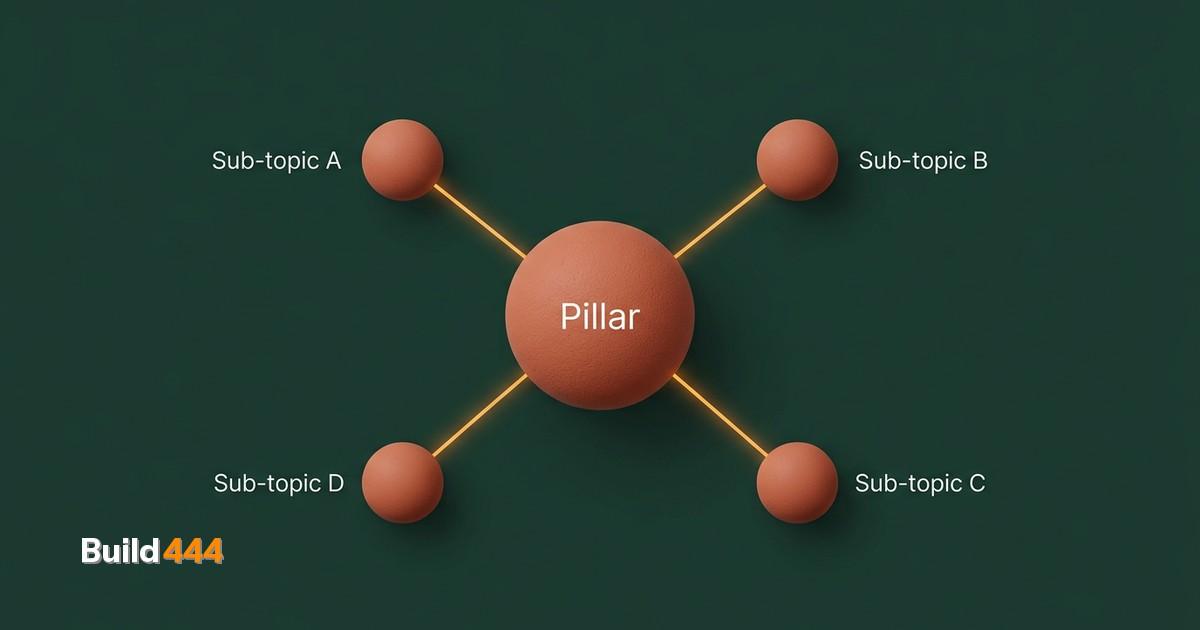
Cluster, do not scatter. One article will not rank for everything. Build topic clusters. Write a pillar page and supporting articles that link to each other. This signals topical depth to search engines.
We run keyword research through DataForSEO, cross-referencing Google Ads volume data with SERP analysis and difficulty scores. It costs about $0.20 per research batch. That is cheaper than guessing wrong. (More on how we automate this entire pipeline.)
Why most blog content fails
I have looked at hundreds of company blogs. The same problems show up again and again.
Too generic. "5 Tips to Improve Your Website" could have been written by anyone. It contains no unique perspective, no specific data, no original insight. It is a rewrite of 500 other articles.
No clear expertise signal. Who wrote this? Why should I trust them? The page does not say. There is no author bio. No cited sources. No evidence that the writer has actually done the thing they are writing about.
Published and forgotten. Content is not a fire-and-forget weapon. It needs monitoring. After we publish a post, we check its performance at 7 days, 30 days, and 90 days. We update based on what we see. If it is not ranking after 90 days, we figure out why and fix it.
No internal linking strategy. Orphan pages rank poorly. Every new article should link to at least 2-3 other pages on your site. And those pages should link back. This is basic, and most sites do not do it.
"Word count is not a ranking factor." — John Mueller, Search Advocate at Google (SE Roundtable)
Mueller is right. Length alone does not rank. But Ahrefs found a strong correlation between word count and backlinks up to about 1,000 words — because thorough content earns more links. The takeaway: write as much as the topic demands, not more.
Missing schema markup. In 2026, if your blog posts do not have Article schema, FAQ schema, and proper Open Graph tags, you are leaving ranking signals on the table. We cover exactly what schema you need in our 47-point SEO audit checklist. These are not advanced techniques. They are table stakes.
Content that ranks vs. content that doesn't
| Factor | Content that ranks | Content that fails | |--------|-------------------|-------------------| | Word count | 1,500-3,000 words on core topics | Under 300 words of thin content | | Structure | Clear H1 → H2 → H3 hierarchy | Flat wall of text, headings used for styling | | Author signals | Real bio with credentials, LinkedIn | No author info, generic "admin" byline | | Sources | Cites studies, links to data | No citations, vague claims | | Schema | Article + FAQ + BreadcrumbList | None or incomplete | | Internal links | 2-3+ links to related content | Zero internal links (orphan page) | | Updates | Reviewed quarterly, dateModified set | Published once, never touched |
Our process: research to ranking
Here is the exact process we follow for every piece of content we publish at Build444.
1. Research (2-3 hours). Keyword analysis. Competitor content audit. SERP analysis for the target term. We look at what ranks, why it ranks, and what is missing from the current results.
2. Outline (1 hour). Structure the article with H2s and H3s before writing a single paragraph. Define the unique angle. Identify the first-party data we will include. Decide on the FAQ questions.
3. Draft (3-4 hours). Write with a specific voice and a specific audience in mind. Every section should either teach something specific or share an original observation. No padding.
4. Optimize (1-2 hours). Add schema markup. Optimize the title tag and meta description. Build internal links. Compress images. Check heading hierarchy. Add alt text with intent-matching descriptions.
5. Publish and distribute (1 hour). Push live. Submit to Search Console. Share on LinkedIn with a custom summary. Add to our email newsletter if relevant.
6. Monitor and update (ongoing). Track rankings at 7, 30, and 90 days. Check which queries the page appears for in Search Console. Update content based on what we learn. Add new sections if we see related queries gaining traction.
8-12 hours per article. That is the real cost of content that ranks. Most teams spend 1-2 hours per post and get zero traffic. The ROI is in the research and optimization, not the writing speed.
This process takes 8-12 hours per article. It is not fast. But it works. Most blog posts get zero organic traffic. Ours don't — because we do the work most people skip.
The uncomfortable truth
Most businesses do not need more content. They need better content. Fewer articles, each one built with actual research, real expertise, and a clear plan for getting found.
If you are publishing two blog posts a week and none of them rank, the answer is not three blog posts a week. It is one post a month that is actually worth reading, properly structured, and actively monitored.
Content that ranks in 2026 is not about tricks. It is about doing the boring fundamentals better than everyone else. Structure your pages. Prove your expertise. Research your keywords. Publish with intent. Then pay attention to what happens.
That is what works. Everything else is noise.
Want to know where your content stands right now? Our SEO audit report scores your site across 10 categories — including content quality, schema, and AI readiness — and delivers a prioritized action plan as a PDF.
Free: 47-point SEO audit checklist
The same checklist we use on every client site. Download the PDF and audit your own site today.
Get the free checklist →